

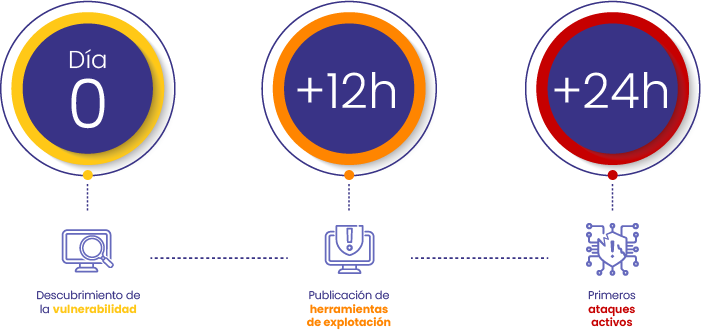
Las amenazas digitales no dan espera. Así se ve hoy el ciclo de una vulnerabilidad crítica:
Línea de tiempo de una amenaza digital
1. Se detecta una nueva vulnerabilidad crítica en una aplicación ampliamente utilizada.
2. Horas después, ya circulan métodos y herramientas desarrolladas por ciberdelincuentes para explotarla.
3. En menos de 48 horas, los primeros ataques ya están en marcha.
Y si tu infraestructura no cuenta con un proceso ágil y eficaz para cerrar esas brechas mediante actualizaciones, estás dejando una puerta abierta a los atacantes.
Cada hora sin aplicar un parche es una oportunidad para que una amenaza se vuelva real.
Automatizar la gestión de parches reduce el riesgo, mejora la velocidad de respuesta y protege tus sistemas antes de que sea demasiado tarde.
En ciberseguridad, la diferencia entre estar protegido o sufrir un ataque puede radicar en unas pocas horas.

48 horas: el nuevo margen de maniobra
El tiempo disponible para actuar frente a vulnerabilidades críticas es cada vez más corto.
No basta con aplicar actualizaciones: hay que hacerlo rápido, de forma precisa y sin depender de procesos manuales.
¿Está tu organización preparada para reaccionar en menos de 48 horas?
Para lograrlo, se necesitan tres capacidades fundamentales:
- Tener visibilidad completa de todos los dispositivos que deben protegerse
- Identificar y priorizar de forma inteligente para saber qué atender primero
- Contar con herramientas automatizadas que permitan aplicar los parches incluso con equipos fuera de la red

¿Por qué parchear a tiempo sigue siendo un desafío?
Hoy en día, muchos entornos de TI están diseñados para ofrecer flexibilidad, pero no Parchear a tiempo no es fácil. Muchos entornos de TI están pensados para ser flexibles, pero no para reaccionar rápido frente a amenazas de seguridad. Hay equipos que pasan días sin conectarse a la red, usuarios que trabajan desde casa o en movimiento, sistemas antiguos que requieren revisiones manuales, distintas versiones de software funcionando al mismo tiempo y, en muchos casos, falta una política clara de actualizaciones. Todo esto complica el mantener los sistemas protegidos.
En este panorama, seguir usando métodos tradicionales para aplicar parches no solo retrasa la respuesta ante riesgos, sino que hace insostenible la protección frente a amenazas que avanzan cada vez más rápido.

ADM: parcheo automatizado para un mundo impredecible
La funcionalidad de parcheo incluida en Aranda Device Management (ADM) está pensada para reducir el riesgo sin aumentar la carga operativa.
Con ADM puedes:
- Detectar equipos desactualizados automáticamente
- Priorizar parches según criticidad, tipo de usuario o dispositivo
- Programar despliegues silenciosos en horarios definidos
- Automatizar la distribución en ambientes híbridos
- Obtener reportes claros sobre cumplimiento y brechas
Y no solo se trata de parches de sistema operativo. ADM también soporta aplicaciones de terceros, incluyendo herramientas de productividad y software especializado.

Tu superficie de ataque no se reduce sola
Con el crecimiento constante de amenazas y su velocidad de propagación, esperar para actuar ya no es una opción. Parchear de forma reactiva equivale a convivir con vulnerabilidades abiertas, dejando expuesta tu infraestructura en todo momento. Sin automatización ni prioridades claras, el proceso de actualización se vuelve lento, manual y difícil de escalar.
Con ADM, el parcheo deja de ser una carga y se convierte en una ventaja. Al automatizar y centralizar la gestión de parches, puedes cerrar brechas con mayor rapidez, reducir riesgos y liberar al equipo TI para que se enfoque en tareas estratégicas.
Como resultado: más seguridad, menos exposición y una operación mucho más eficiente.
¿Listo para dar el siguiente paso?
Agenda tu demo personalizada y comprueba cómo Aranda puede reforzar la seguridad de tu entorno TI desde su núcleo.
Aranda Software | Protege lo que impulsa tu negocio.

